
What Is Dark Art? [Mallorca Art: Reference]
Dark Art is a genre characterized by macabre, surreal, or grotesque imagery that explores themes of mortality, horror, and existential dread.
The term describes a broad category of visual art, spanning painting, drawing, photography, sculpture, and digital media, that uses low-key tonal values, chiaroscuro technique, and thematic engagement with mortality, the uncanny, the sublime, or psychological intensity to produce works whose primary expressive register is shadow, dread, melancholy, or existential depth rather than conventional beauty.
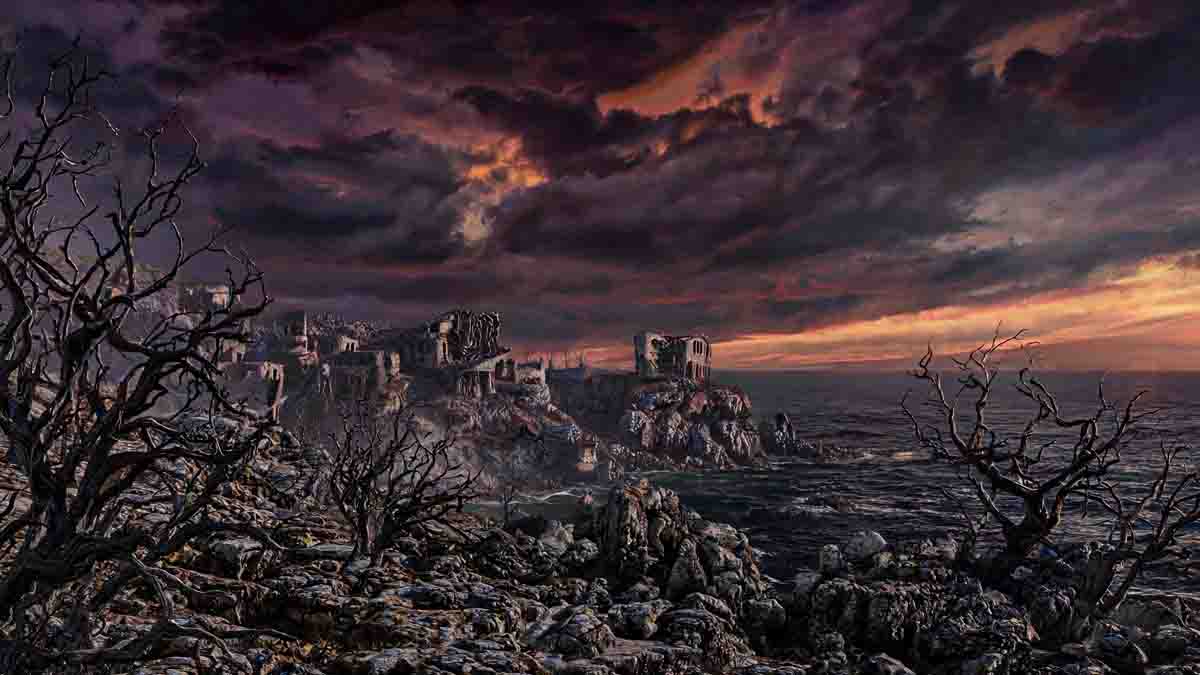
macabre, surreal, and gothic themes with Mediterranean symbolism.
It is not a single style or movement. It is a persistent tendency in visual art that has appeared across every major period of Western painting, from the Italian Baroque through the Romantic sublime, Symbolism, and German Expressionism to the contemporary dark aesthetic market, united by a single insight: that darkness is not the absence of light but a presence in its own right, with its own weight, texture, and meaning.
"The mistake is treating darkness as background. In the greatest dark paintings, Caravaggio, Rembrandt, Goya, the shadow is the subject. The figures emerge from it, not the other way around. A work is genuinely dark when its shadow is doing as much compositional and psychological work as its light."
Understanding this distinction, between work that uses darkness structurally and work that is merely painted in dark colours, is the foundational evaluative judgement for any serious engagement with the tradition. The question is not whether the palette is dark, but whether the darkness is solving formal problems, generating psychological depth, and creating a visual experience that lighter work cannot achieve.
Dark Art: Key Facts
-
01
Definition
Dark art uses shadow, low-key tone, and themes of mortality, the uncanny, or the sublime to create works beyond conventional beauty. The tradition is more than 600 years old, beginning with Leonardo da Vinci's sfumato (late 15th century) and Caravaggio's tenebrism (c.1600).
-
02
The Technical Core
Chiaroscuro (Italian: chiaro = light, scuro = dark) is the foundational technique, the systematic use of strong contrast between light and shadow to model form and generate dramatic psychological effect. In tenebrism, Caravaggio's extreme form, figures emerge from near-total darkness under a single directional light source.
-
03
The Canonical Benchmark
Francisco Goya's Black Paintings (1819–1823, Museo del Prado, Madrid), fourteen large-scale oil murals painted privately on the walls of his house, are the most extreme dark art project in Western painting history. Saturn Devouring His Son (143 × 81 cm) is the most widely cited candidate for the most psychologically powerful dark painting ever made.
-
04
The Sub-Genre Taxonomy
Dark art encompasses six named sub-genres: tenebrism (extreme chiaroscuro), dark surrealism, dark expressionism, gothic art (death imagery and medieval iconography), dark abstract (darkness as purely formal element), and dark aesthetic (atmospheric, residential-design-oriented contemporary category).
-
05
The Psychological Mechanism
Carl Jung's shadow theory is the primary psychological framework: dark art provides a mechanism for externalising suppressed psychological content, allowing emotional processing of anxiety, grief, and mortality awareness. Art therapists affiliated with the British Association of Art Therapists (BAAT) have documented this cathartic function in therapeutic contexts.
-
06
The 70/30 Rule in Dark Art
The compositional 70/30 rule, 70% dominant tone to 30% contrasting, in dark art means approximately 70% dark (low-key values, shadows, near-black grounds) to 30% light (illuminated focal points). Caravaggio's tenebrism operates at the more extreme ratio of approximately 85% dark to 15% light. This ratio is what generates the psychological drama that defines the tradition.
-
07
The 2026 Market Context
Dark wall art is one of the fastest-growing residential art categories in 2026, driven by interior design trends toward moody, atmospheric rooms and a collector base, predominantly Gen Z and millennial, that actively rejects the decorative neutrality of mainstream art retail. Price tiers: €200–€2,000 entry; €2,000–€15,000 mid-market; €15,000+ investment grade.
What Makes Art Look Dark: The Visual Mechanics
Darkness in art is not simply a matter of painting something black. It is produced by the relationship between specific visual elements, tonal values, colour temperature, contrast ratios, compositional choices, and subject matter, that together create the psychological experience of darkness. A work combining three or more of these elements will consistently read as dark in register.
-
01
Low-Key Tonal Register
Dark art operates predominantly in the lower half of the tonal scale, what painters call the low-key register. In a genuinely dark painting, the majority of the picture plane occupies values between 0 (black) and 50 (mid-tone), with the lightest areas used sparingly as focal points of contrast. This requires precise control: the darkest darks must read as deep and luminous, not dead and flat. A muddy, overworked painting is not a dark one. Tonal value is the lightness or darkness of a colour independent of its hue, a prussian blue and a burnt sienna can occupy the same tonal value while appearing entirely different in colour.
-
02
Chiaroscuro: High Contrast as Drama
The contrast ratio between the lightest and darkest areas of a painting is the primary generator of visual drama. In tenebrism, Caravaggio's extreme form of chiaroscuro, forms emerge from near-total darkness, illuminated by a single directional light source, as if spotlit on a dark stage. The transition from shadow to light is abrupt rather than gradual. The effect is theatrical, immediate, and psychologically forceful. Rembrandt's psychological variant of chiaroscuro, where shadow conveys interiority and age rather than theatrical drama, is equally powerful but operates through gradual tonal modelling rather than abrupt transition.
-
03
Cool, Desaturated Palette
The palette of dark art tends toward cool and desaturated: lamp black, prussian blue, burnt umber, raw sienna, indigo, payne's grey. These colours absorb light rather than reflecting it, creating the visual sensation of depth and shadow. Warm accent colours, a single cadmium red, a flash of yellow ochre, can appear as punctuation against the larger dark fields, functioning like the single candle flame in a Caravaggio. Highly saturated colour generally counteracts the dark register regardless of tonal values: a painting in saturated reds and yellows will not read as dark even if its average tonal value is low.
-
04
Compositional Mystery: Partial Revelation
Dark art characteristically withholds as much as it reveals. Forms partially obscured by shadow, edges that dissolve into darkness, ambiguous spatial depth, figures that emerge from or recede into near-black, these compositional choices are as important to the dark register as tonal value and colour. A painting in which everything is fully described will not feel dark regardless of its palette. The viewer who must work to understand what they are seeing generates the psychological experience of darkness even in moderate tonal conditions. Compositional mystery is the element most absent from commercially produced "dark aesthetic" prints, and its absence is immediately visible.
-
05
Subject Matter: Mortality, the Uncanny & the Sublime
Dark art engages with the darker dimensions of human experience: mortality and its symbols (memento mori, vanitas still life); the uncanny (distorted scale, ambiguous identity, the figure in shadow); the sublime (vast, threatening natural forces that overwhelm the human figure); psychological states of anxiety, grief, or alienation; and gothic imagery. Subject matter alone does not make dark art, technically inept dark-themed painting is illustration, not art. But subject matter focuses and amplifies the visual mechanics of darkness, giving a work the psychological depth that purely formal dark painting cannot achieve on its own.
The Dark Art Traditions: A Visual Timeline
Dark art is not a contemporary invention. It is a thread running continuously through the history of Western painting, appearing in every major period, persisting through revolutions of style, and currently in one of its most commercially and critically active phases.
-
16th–17th Century
Chiaroscuro & Tenebrism: The Technical Foundation
Leonardo da Vinci (1452–1519) developed sfumato, light blending gradually into shadow, as a means of modelling form. Caravaggio (1571–1610) systematised tenebrism: near-total darkness, single directional light source, abrupt shadow transition. His major works, Judith Beheading Holofernes (c. 1599, Galleria Nazionale d'Arte Antica, Rome), The Calling of Saint Matthew (1600, San Luigi dei Francesi, Rome), established the technical and philosophical vocabulary of dark painting. Rembrandt van Rijn (1606–1669) extended this into psychological interiority: his late self-portrait series (1650s–1669) uses shadow not to dramatise but to contemplate, conveying age, mortality, and inner life.
-
1819–1823
Goya's Black Paintings: The Extreme Dark Art Project
Francisco Goya (1746–1828) painted his Black Paintings directly onto the walls of his house, the Quinta del Sordo, in the final years of his life. Fourteen large-scale oil murals, in near-total black, grey, and ochre, depict hallucinatory and deeply disturbing subjects: Saturn Devouring His Son (143 × 81 cm), The Great He-Goat, Two Men Fighting with Cudgels. Made for no audience and with no apparent intention of public display, they are the purest expression of darkness as a psychological state that painting has produced. Transferred to canvas in 1873 and now held at the Museo del Prado, Madrid, they remain the reference point against which all subsequent dark painting is measured.
-
Late 18th–Mid 19th Century
Romanticism & the Sublime: Darkness as Emotional Subject
The Romantic movement introduced the concept of the sublime, natural forces so vast, overwhelming, and threatening that they produce an experience beyond conventional beauty: terror mingled with awe. J.M.W. Turner's storm-saturated seascapes, Caspar David Friedrich's fog-shrouded figures at the edge of vast dark landscapes, Henry Fuseli's The Nightmare (1781, Detroit Institute of Arts), these works use darkness not as a technical device but as the primary emotional subject. The Romantic sublime is the direct ancestor of contemporary moody landscape and dark atmospheric painting.
-
1880s–1910s
Symbolism: Dreamlike, Deathward, Irrational
Symbolism rejected Realism and Impressionism in favour of a painting practice rooted in dream, myth, mortality, and the irrational. Gustave Moreau, Odilon Redon, Fernand Khnopff, Franz von Stuck produced work of extraordinary visual intensity, characterised by dark jewel-like palettes, death imagery, and a sustained engagement with the uncanny. Edvard Munch's The Scream (1893, National Museum, Oslo), though usually classified as Expressionist, embodies the Symbolist impulse at its most psychologically raw. Symbolism is the direct artistic ancestor of gothic art in all its contemporary forms.
-
1905–1933
German Expressionism: Psychological Distortion as Dark Language
Die Brücke and Der Blaue Reiter used distorted form, psychological colour, and raw emotional intensity to create paintings that operate as direct transmissions of inner states. Ernst Ludwig Kirchner, Erich Heckel, Egon Schiele, and Karl Schmidt-Rottluff produced work that is simultaneously formally radical and psychologically dark. Expressionism's legacy is directly present in contemporary dark painting: the willingness to distort, exaggerate, and psychologically charge visual form at the expense of conventional beauty is the Expressionist inheritance. It is also the tradition most directly connected to Mallorca's own dark art lineage through the native Mallorcan modernist Juli Ramis Ramis (born Sóller, 1909; died Palma, 1990).
-
1960s–2026
Contemporary Dark Art: From Bacon to Dark Aesthetic
Francis Bacon (1909–1992), his screaming popes and compressed, violent figures, brought Expressionist darkness into the post-war gallery context. Zdzisław Beksiński (1929–2005) developed a post-apocalyptic dark surrealism of extraordinary consistency and psychological power. H.R. Giger (1940–2014) extended dark art into the biomechanical. Mark Rothko's late dark canvases, particularly the Seagram Murals, defined dark abstract painting. In 2024–2026, the dark aesthetic category has become one of the fastest-growing segments of the residential art market, driven by Gen Z and millennial collectors who actively reject decorative neutrality. Beksiński estate works have achieved significant auction records at Christie's and Sotheby's in 2023–2025.
Chiaroscuro: The Technical Foundation of Dark Painting
Chiaroscuro (from the Italian chiaro, meaning light, and scuro, meaning dark) is the single most important technical concept in the history of dark painting. Understanding it allows buyers, collectors, and viewers to evaluate dark art with precision, to distinguish between work that uses darkness structurally and work that is merely dark in colour.
Large-format prints and the architecture of Mediterranean light, a deep-dive into why photography has overtaken painting as the medium of choice for Mallorca's interior market.
Wall art refers to any decorative artwork created or framed to display on a wall.
Why Do People Make Dark Art? The Psychology
The question of why artists create dark work, and why audiences seek it out, is one that art historians, psychologists, and critics have approached from different directions. The most consistently useful framework is Carl Jung's concept of the shadow.
"One does not become enlightened by imagining figures of light, but by making the darkness conscious."
In Jungian psychology, the shadow is the repository of suppressed psychological content, the aspects of the self that cannot be admitted into conscious identity. It contains not only negative impulses but any psychological material that has been rejected or disowned: fear, grief, rage, mortality awareness, the uncanny. Dark art, on this reading, is the visual externalisation of the shadow, the mechanism by which what cannot be said is shown.
This is not merely theoretical. Art therapists affiliated with the British Association of Art Therapists (BAAT) have documented the cathartic function of dark imagery production in therapeutic contexts: the making of dark art provides emotional processing of experiences that cannot be handled linguistically. Louise Bourgeois's spider sculptures, rooted in her relationship with her mother, and Edvard Munch's anxiety-driven Expressionist work are the canonical examples of artists for whom dark art served an explicitly psychological processing function.
Beyond the clinical context, dark art addresses psychological dimensions of the human condition that high-key, decorative art systematically avoids: mortality, finitude, the weight of the past, the anxiety of the present. The collectors who are most consistently drawn to dark art are not morbid or pessimistic, they are psychologically serious. They want their walls to make demands on them. They want to be in a room with something that has weight.
In 2024–2026, the dark aesthetic market has grown significantly among Gen Z and millennial collectors. Post-pandemic, there is measurable demand for emotionally resonant, psychologically complex art from a buyer base that has self-identified as rejecting the decorative neutrality of mainstream art retail. This is not a trend, it is a permanent shift in what a significant segment of the residential art buyer expects from the work on their walls.
Dark Art Sub-Genres: The Complete Taxonomy
Dark art is not a monolithic category. Six distinct sub-genres operate under the broader heading, each with different technical standards, different evaluative criteria, and a different relationship between darkness and meaning.
Tenebrism
Caravaggio's extreme variant of chiaroscuro. Near-total dark ground, single directional light, abrupt shadow transition. The most theatrically dramatic form of dark painting. The technical benchmark against which all subsequent dark painting is measured. Primary exponents: Caravaggio, José de Ribera, Artemisia Gentileschi. Contemporary application: studio dark figurative painting that deploys a single-source lighting setup.
Gothic Art
In its historical sense: medieval European art and architecture (12th–16th centuries). In contemporary usage: visual art drawing on medieval sources, Romantic-era death imagery, Victorian mourning culture, and gothic subculture. Characterised by dark romanticism, mortality iconography, and an aesthetic of pale figures against dark grounds. Not all dark art is gothic; all gothic art is dark.
Dark Surrealism
Surrealism's dark variant, dreamlike imagery with a threatening rather than playful register. Beksiński's post-apocalyptic landscapes, H.R. Giger's biomechanical figures, and contemporary digital dark surrealists. Uses the irrational logic of surrealism to generate existential dread rather than wonder. The dominant contemporary dark art style for collectors working in the €2,000–€15,000 price range.
Dark Expressionism
The Expressionist tradition applied to dark psychological subject matter. Distorted form, compressed colour, raw emotional intensity. Francis Bacon's screaming popes and compressed violent figures; Juli Ramis's thick impasto and abbreviated drawing in Mallorca. The distinction from tenebrism: dark expressionism does not require a low-key palette or chiaroscuro, it operates through formal distortion and psychological charge.
Dark Abstract
Removes subject matter entirely and works with darkness as a purely formal element: tonal fields in near-black and dark grey, contrasted with small areas of warm or cool light. Mark Rothko's late dark paintings (Seagram Murals) are the canonical reference. The sense of standing before something vast, heavy, and just beyond comprehension. For residential purchase, dark abstract canvases at 100×120cm or above create the most powerful wall presences available.
Dark Aesthetic Art
The digital-native contemporary category, drawing on gothic, witchcore, dark romantic, and cottagecore-dark aesthetics. Uses darkness atmospherically rather than structurally: it creates mood and register rather than solving formal problems. The residential interior design buyer's primary dark art category. Atmospheric darkness done with genuine painterly skill is as valuable as structural darkness done with academic precision. The collector who can recognise both dimensions will build the stronger collection.
Understanding Dark Art: A Strategic Approach
Dark art is a broad category and an easy one to misread. The distinction between work that uses darkness structurally and work that is merely painted in dark colours is the most important evaluative judgement any buyer or viewer needs to make. The following framework builds that judgement step by step.
-
01
Understand What Structural Darkness Means
A painting is structurally dark when its shadow is doing compositional and psychological work, not merely providing background colour. Ask: is the dark area generating form, creating spatial depth, producing psychological tension, or withholding information that the viewer wants? If yes, the darkness is structural. If the dark area is simply a neutral ground on which lighter elements sit, the painting is dark in colour only, not in register. This distinction is the starting point for all serious engagement with dark art.
-
02
Learn the Chiaroscuro Standard
Caravaggio's tenebrism is the technical benchmark. In his major works, the contrast ratio between the lightest and darkest areas is near-absolute, near-white against near-black, and the transition between them is abrupt rather than gradual. When evaluating any contemporary dark painting, hold it against this standard: is the contrast ratio genuinely high, or does the darkest area merely read as medium-dark grey? Is the shadow-to-light transition doing expressive work, or is it simply the result of mixing too much black into the pigment? The Caravaggio standard is demanding, but it is the correct one.
-
03
Distinguish Dark Art from Dark-Themed Decoration
Dark-themed decoration uses dark imagery, skulls, ravens, gothic architecture, nocturnal landscapes, without deploying the visual mechanics that produce genuine darkness. The test is simple: stand in front of the work and ask whether the darkness is doing something, or whether it is merely representing something dark. A painting of a skull against a dark background is not dark art. A painting in which the darkness itself generates dread, in which you cannot see everything, in which the shadow is the subject, is dark art. Subject matter is the starting point; visual mechanics determine whether it succeeds.
-
04
Know Which Dark Tradition a Work Inhabits
Dark art is not monolithic. Chiaroscuro and tenebrism are primarily about formal contrast and three-dimensional modelling. The Romantic sublime is about emotional overwhelm and the smallness of the human figure before natural force. German Expressionism is about psychological distortion and raw emotional transmission. Gothic art draws on death imagery, medieval iconography, and dark romanticism. Dark aesthetic is about atmosphere and mood in residential contexts. Each tradition has different technical standards and different evaluative criteria. Knowing which tradition a work operates in tells you what to look for and what to demand from it.
-
05
See It In the Light It Will Actually Live In
Dark art is the wall art category most dramatically affected by lighting conditions. A dark painting viewed under harsh overhead fluorescent light will look flat and dead. The same painting under a warm directional picture light at 30° from the wall, the gallery standard, 2700–3000K colour temperature, will reveal shadow detail, surface texture, and tonal depth that makes the work compelling. Before forming a final judgement about any dark painting you are considering acquiring, see it in directional light that approximates how it will be displayed. The correct frame is a simple dark wood floater or matte black, no ornate gold frames, which impose a historical register that contemporary dark work does not inhabit.
-
06
Apply the Scale Principle
Dark art works at its best at significant scale. The psychological power of a dark painting, the sense of darkness as presence, of shadow as material, requires physical scale to register fully in a room. A small dark painting on a large wall loses the quality that makes it compelling. The minimum effective scale for dark wall art as a primary focal point is 80cm in the dominant dimension; 100×120cm is significantly more effective; 120×160cm or above is where the full psychological power of the dark register becomes available. This is the Rothko lesson: his Seagram Murals are not powerful because they are dark, they are powerful because they are large and dark together.
-
07
Buy What Stops You, Not What Impresses You
The correct reason to buy any dark painting is that it does something to you when you stand in front of it, not that it matches a dark wall, not that dark aesthetic is a trending interior design category, and not that you think it will appreciate in value. The dark art tradition is 600 years old. It has survived every change of taste and fashion because its core psychological mechanism, the sense of confronting something just beyond comprehension, just outside the reach of light, remains as powerful as it was in Caravaggio's Rome. When you find a dark painting that generates that response, the acquisition decision is not complicated.
Is Dark Art Right for Your Walls?
Dark art works at its best when scale, lighting, and context are correctly aligned. It requires controlled or directional lighting, without which the shadow detail that defines the work becomes invisible. It rewards rooms with high ceiling heights and generous wall expanses, where the psychological scale of the tradition can be fully realised. And it requires a collector who is prepared to live with intensity, with a work that does not merely decorate a wall but makes demands on the attention of everyone who enters the room.
For buyers with those conditions and that disposition, dark art offers something that high-key, light-saturated painting cannot: the experience of standing before something that holds the room. Not through colour or pleasantness, but through the weight of its shadow and the precision of what it chooses not to show you.
Mallorca and the Dark Tradition
Mallorca is most associated with its celebrated quality of light, the high-key Mediterranean luminosity at 39°N that has drawn painters to the island since the 1870s. But the island has a counter-tradition that is less visible, more powerful, and of genuine significance to anyone interested in dark art: a sustained body of work produced in response to its shadow, its winter storms, its dramatic geological violence, and the psychological intensity that long Mediterranean summers generate in artists who are serious about their work.
Joan Miró's late Mallorcan period (1956–1983) includes a significant body of work in which darkness plays a structural role, near-black canvases in which the biomorphic forms carry psychological weight rather than decorative energy, and graphic works in which the line itself is violent. The Fundació Pilar i Joan Miró's collection of 2,500+ works at Carrer de Saridakis, 29, Palma, includes these dark-register pieces alongside the more celebrated primary-colour works. The late works represent an aspect of Miró's Mallorcan practice that the popular image of the artist entirely obscures.
Juli Ramis Ramis (born Sóller, 1909; died Palma, 1990), the principal native Mallorcan modernist, worked in an Expressionist idiom whose thick impasto, compressed colour, and abbreviated drawing produce work that reads in a dark psychological register even when the palette includes warm tones. His work is not dark in the chiaroscuro sense, it rarely operates in the low-key tonal register, but it is dark in the Expressionist sense: emotionally raw, psychologically intense, operating beyond conventional beauty. For collectors interested in genuine Mallorcan dark art with a documented exhibition history, Ramis is one of the most significant and undervalued figures currently available.
"The island has two traditions, not one. Everyone talks about the light. The serious painters know that the Tramuntana in January, the northwest coast at dusk, the studio at five in the morning before the sun has come over the mountains, that is where the real work gets done."
A contemporary generation of painters working in studios around Deià, Sóller, and the outskirts of Palma are actively producing work in dark aesthetic, dark abstract, and moody atmospheric registers, as a deliberate counterweight to the island's tourism-associated visual clichés. This work is available through galleries in Palma's historic centre at prices significantly below equivalent work in London, Paris, or Berlin, and with the added provenance value of genuine island origin.
Where to Buy Original Dark Art
The market for original dark art operates across several distinct channels, each with different price points, provenance standards, and quality levels. Understanding which channel suits your intent, decoration, collection, or investment — is the first decision any buyer of dark art needs to make.
Four Reliable Acquisition Routes
- Gallery Purchase: Primary Market. Galleries representing painters working in dark aesthetic, dark abstract, Expressionist, and dark atmospheric traditions are the most reliable source of original dark art with documented provenance. In Mallorca, several galleries in Palma's historic centre represent painters working in dark and moody registers. Gallery purchase provides the fullest provenance documentation, artist's name, title, medium, dimensions, exhibition history, certificate of authenticity, and the gallery's ongoing relationship with the artist as a resource for future acquisitions. Price range: €2,000–€30,000+ for original work by represented artists.
- Open Studio Events: Direct from Artist. Open studio events in the Deià–Sóller–Pollença triangle (April–May and September–October) provide access to painters working in dark aesthetic and dark atmospheric registers who have not yet been absorbed into the commercial gallery system. This is where the most interesting and least predictable dark art is available, work produced in response to the island's dramatic geological conditions and winter light, at prices significantly below gallery levels. Price range: €200–€5,000 for direct studio purchases.
- Specialist Dealers: Secondary Market. For buyers seeking dark art from historical traditions, chiaroscuro paintings, Romantic-era dark landscape, Symbolist works, Expressionist canvases, specialist dealers in major cities (London, Munich, Amsterdam, Madrid) are the correct channel. Works by Mallorcan artist Juli Ramis appear through Spanish specialist dealers and occasionally at auction houses where growing scholarly interest in Catalan and Mediterranean Expressionism is affecting prices. Price range: €10,000–€500,000+ for historical dark art with exhibition histories.
- Online Platforms, With Caution. Saatchi Art, Artsy, and similar platforms list dark aesthetic and dark abstract work from artists worldwide, including some who produce work of genuine quality. For any dark wall art purchase above €500 from an online platform, request the artist's full name, website, gallery representation history, and evidence of exhibition or publication credits. A serious artist working in the dark aesthetic tradition will have all of this immediately available. Anyone who cannot provide it is not worth the risk.
Gallery directory, price tiers, open studio calendar for Mallorca, authentication checklist, and what to ask before every art purchase.
Frequently Asked Questions — Dark Art
People Also Ask
8 QuestionsDark art is a broad category of visual art that uses shadow, low-key tone, psychological intensity, and themes of mortality, the uncanny, or the sublime to create works beyond conventional beauty. It encompasses chiaroscuro painting, the Romantic sublime, Symbolism, German Expressionism, and contemporary gothic and dark aesthetic movements, united by the principle that darkness is a structural, meaning-bearing presence, not merely the absence of light. A work is genuinely dark when its shadow is doing as much compositional and psychological work as its light.
Chiaroscuro (from the Italian chiaro = light, scuro = dark) is the technique of using strong contrasts between light and shadow to give three-dimensional form to figures and to create dramatic visual and psychological effect. Developed by Leonardo da Vinci and systematised by Caravaggio as tenebrism (c.1600), it became the foundational technical language of dark painting. In its most extreme form, forms emerge from near-total darkness illuminated by a single directional light source. The central insight: darkness can be the primary subject of a painting, not merely the absence of light.
Dark art encompasses six named styles: tenebrism (extreme chiaroscuro, Caravaggio), dark surrealism (Beksiński, H.R. Giger), dark expressionism (distorted form, psychological intensity), gothic art (death imagery, medieval iconography), dark abstract (Rothko's late work), and dark aesthetic (contemporary atmospheric, residential-design-oriented category). The unifying technique is chiaroscuro. The unifying philosophical position is that darkness is not background but subject.
The chiaroscuro tradition in dark painting begins with Leonardo da Vinci (1452–1519), who developed sfumato. It was systematised as tenebrism by Caravaggio (1571–1610), whose near-total dark grounds and single directional light source became the foundational method. Rembrandt van Rijn (1606–1669) extended this into psychological interiority. Francisco Goya (1746–1828) took it to its extreme in his Black Paintings (1819–1823), the most extreme dark art project in Western painting history, painted privately on the walls of his own house.
According to Carl Jung's shadow theory, dark art provides a mechanism for externalising suppressed psychological content, allowing emotional processing of anxiety, grief, trauma, and mortality awareness. Art therapists (British Association of Art Therapists, BAAT) have documented the cathartic function of dark imagery production in therapeutic contexts. Beyond clinical application, dark art addresses the psychological dimensions of human experience, mortality, finitude, existential weight, that decorative, high-key art systematically avoids. The dark art tradition exists because these dimensions of experience require visual form.
Francisco Goya's Saturn Devouring His Son (1819–1823, oil mural transferred to canvas, 143 × 81 cm, Museo del Prado, Madrid) is the most widely cited candidate, painted privately on the walls of his house, for no audience, in the final years of his life. Henry Fuseli's The Nightmare (1781, Detroit Institute of Arts) and Caravaggio's Judith Beheading Holofernes (c.1599, Galleria Nazionale d'Arte Antica, Rome) are also among the canonical dark paintings. All three are citable by institution, date, and dimensions.
The 70/30 rule is a compositional principle stating that a painting should be approximately 70% of one dominant tone or element and 30% of a contrasting one. In dark art specifically: 70% dark (low-key values, shadows, near-black grounds) to 30% light (the illuminated focal points that generate drama). Caravaggio's tenebrism operates at an even more extreme ratio, closer to 85% dark to 15% light, which is what produces the distinctive theatrical drama of his work. The rule governs tonal balance, not necessarily literal colour: a painting can deploy the 70/30 principle in a desaturated cool palette or a warm earth-tone palette with equal effectiveness.
Five principles: (1) Scale correctly, minimum 80cm dominant dimension; 100×120cm or above for full psychological effect. (2) Choose your wall relationship, against a dark wall for total atmosphere; against a white wall for dramatic contrast. (3) Light the work, warm directional picture light (2700–3000K, 30° from wall). Without correct lighting, dark art loses its shadow detail. (4) Frame simply, dark wood floater or matte black; no ornate gold frames. (5) Hang at 150cm centre height, the gallery standard applies regardless of wall colour or surrounding furnishing.