
Photography and the Villa Market
Walk through any newly completed villa in Son Vida or Port d'Andratx and the walls tell a clear story. Photography has overtaken painting as the medium of choice for interior designers sourcing art for their clients. The reasons are practical as much as aesthetic.
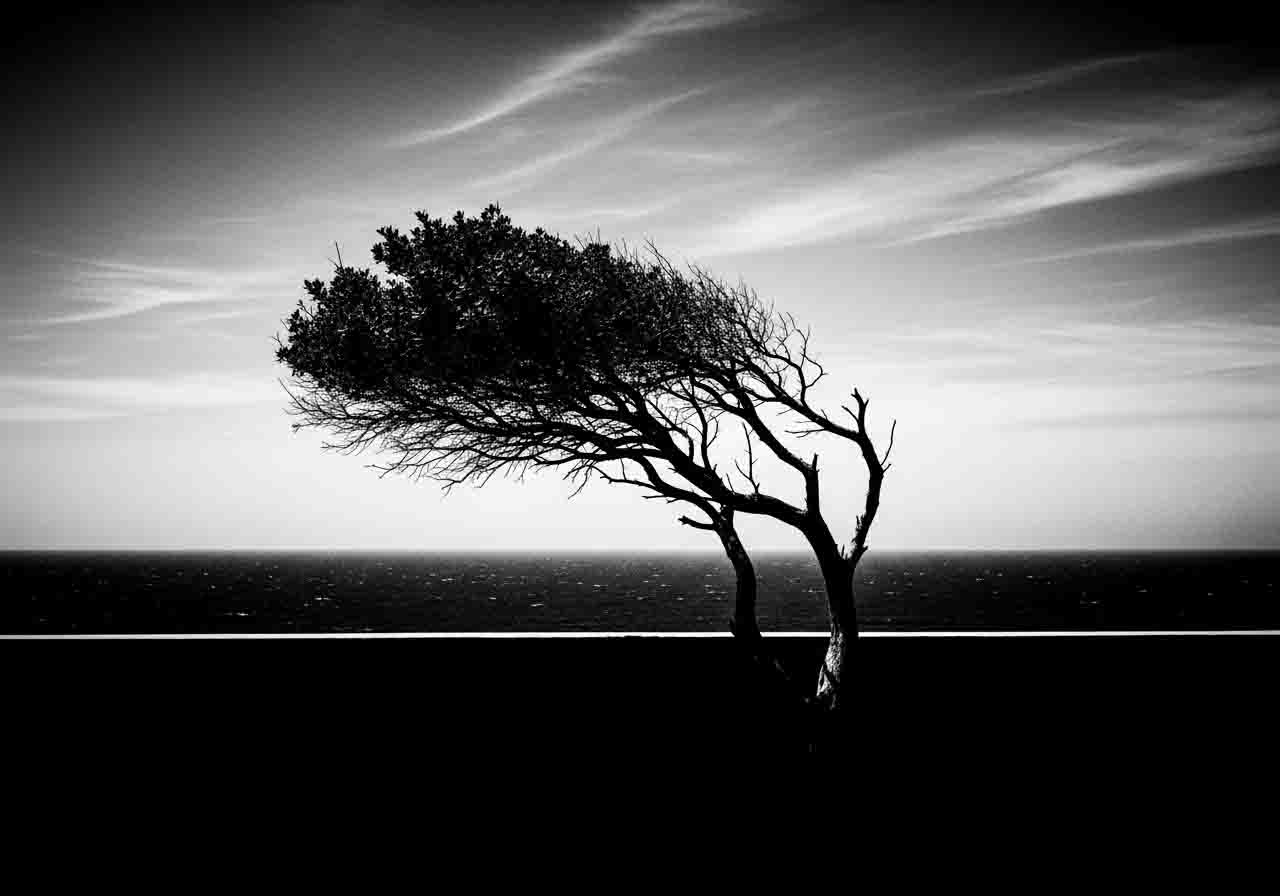
The Mediterranean villa presents a specific set of constraints. The walls are white or off-white. The floors are limestone or terrazzo. The windows are large and the light is constant. A painting, particularly one with a heavy frame and saturated colour, competes with the architecture. A photograph, especially a large-format black-and-white print mounted flush to the wall, complements it. The image becomes part of the room rather than an object placed within it.
The Scale Problem
Modern villas are built on a scale that traditional painting struggles to match. A living room with five-metre ceilings and a fifteen-metre glass facade demands a statement piece that can hold the space without overwhelming it. A two-metre photographic print, hung unframed with a narrow border, achieves this balance. The same dimensions in oil on canvas would feel heavy, literal, and oddly domestic.
"The photograph does not compete with the view. It mediates between the interior and the landscape. That is why it works so well in these houses."
Interior designers working in Mallorca have understood this for years. The most sought-after names on the island, those who specialise in the high-end villa market, maintain relationships with a small group of photographers whose work they commission or source repeatedly. The same names appear in project after project: a Berlin-based photographer who works exclusively in Mediterranean light; a Parisian who produces large-format seascapes; a local artist who documents the island's agricultural architecture in black and white.
A strategic approach to navigating the island's thriving contemporary art scene. Includes gallery maps, collector profiles, and relationship-building guidance.
The Video: The Art of Collecting Photography
Photography collecting is the pursuit of acquiring, preserving, and curating photographs. Collectors are driven by personal interest in specific photographic genres, periods, or individual photographers.
The Market Dynamics
The shift toward photography has created opportunities for artists who might otherwise struggle to find gallery representation. A photographer who produces ten editions of a single image, each at two metres wide, can sell directly to interior designers and collectors without needing the infrastructure of a traditional gallery. Several artists on the island are now working this way, selling through studio visits and private commissions rather than exhibitions.
For the collector, this means access. It means visiting a studio in Sóller, seeing the work in progress, and commissioning a piece for a specific wall. It means shorter lead times and more direct relationships. It also means less provenance documentation, which matters to some buyers and not at all to others.
"Photography is not the future of art collecting in Mallorca. It is the present. The question is no longer whether to buy photographs, but which photographers to buy, and at what scale."
Quarterly dispatches on gallery openings, studio visits, and acquisitions. No excess, only what matters to serious collectors on the island.
The price range for large-format photographic work on the island has settled into a predictable band. Emerging photographers sell editions of five to ten at between three and six thousand euros. Established names with international representation command fifteen to thirty thousand. At the top of the market, a handful of artists whose work appears in museum collections and major fairs sell for fifty thousand and above. These numbers are modest compared with painting, which is part of the appeal for collectors who are buying for a home rather than an investment portfolio.
What to Look For
For the collector new to photography, the advice from the island's most experienced buyers is consistent. Buy for the wall, not for the name. The Mediterranean light is the subject, and the best work acknowledges this without becoming decorative. Avoid images that could be postcards. Look for photographs that require distance to read properly, work that changes as you move through the room.
The technical quality matters. A two-metre print demands resolution that smaller work does not. Ask about the printing process. Ask about the paper. Ask how the work has been tested for longevity in direct sunlight. The best photographers working in Mallorca will have answers to all of these questions, and will welcome them.
The final consideration is the relationship. Photography in Mallorca is still a market built on trust. The best acquisitions come from studio visits, from conversations about process and intent, from seeing the work in the place where it was made. The gallery remains important for validation and context, but the studio is where the decision happens. And in Mallorca, the studios are open.